P0560:文本缩进二叉树
http://dsbpython.openjudge.cn/dspythonbook/P0560/
文本缩进二叉树就是由若干行文本来表示的一棵二叉树。其定义如下:
- 若一行由若干个制表符("\t")和一个字母构成,则该行表示一个二叉树的结点。该结点的层次就是制表符的数量(根是0层)
- 每个结点的父结点,就是它上方,离它最近的,比它往左偏移了一个制表符的那个结点。没有父结点的结点,是树根。
- 如果一个结点的左子树为空但右子树不为空,则在其下面的一行用一个向右多缩进了一个制表符的'*'表示其有空的左子树,然后再表示右子树。若右子树为空,则右子树无须表示。若右子树不为空,则表示完左子树后再表示右子树。若左右子树都为空,则左右子树都不需要表示。
给定一个文本缩进二叉树,求其前序、中序、后序遍历序列。
输入样例的二叉树如下图:
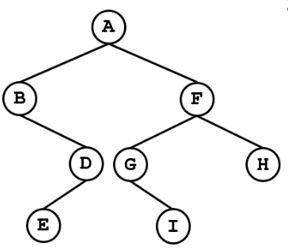
输入
一棵文本缩进二叉树, 不超过100个结点。
输出
该二叉树的前序、中序、后序遍历序列。
样例输入
A
	B
		*
		D
			E
	F
		G
			*
			I
		H
样例输出
ABDEFGIH
BEDAGIFH
EDBIGHFA
思路很:
- 当用字母节点挂父节点的 左子树 时,挂完之后就应该把
parent.next_child从"left"切换到"right"。 stack用列表,遇到更浅的行就stack = stack[:depth],自动丢弃深度更大的旧节点。
python
import sys
sys.setrecursionlimit(10000)

class Node:
    def __init__(self, val):
        self.val = val
        self.left = None
        self.right = None
        # 表示下一个插入到该节点的是 'left' 还是 'right'
        self.next_child = 'left'

def build_tree(lines):
    stack = []   # stack[d] 是深度 d 的最新节点
    root = None

    for line in lines:
        # 计算深度
        depth = 0
        while depth < len(line) and line[depth] == '\t':
            depth += 1
        c = line[depth]

        # 保持 stack 长度等于当前深度
        stack = stack[:depth]

        if c == '*':
            # 标记父节点接下来要挂右子树
            parent = stack[-1]
            parent.next_child = 'right'
        else:
            node = Node(c)
            if depth == 0:
                root = node
            else:
                parent = stack[-1]
                if parent.next_child == 'left':
                    parent.left = node
                    # 挂完左子树后,下一次就该挂右子树了
                    parent.next_child = 'right'
                else:
                    parent.right = node
            # 新节点默认先挂左子树
            node.next_child = 'left'
            # 推入栈
            stack.append(node)

    return root

def preorder(node, res):
    if not node: return
    res.append(node.val)
    preorder(node.left, res)
    preorder(node.right, res)

def inorder(node, res):
    if not node: return
    inorder(node.left, res)
    res.append(node.val)
    inorder(node.right, res)

def postorder(node, res):
    if not node: return
    postorder(node.left, res)
    postorder(node.right, res)
    res.append(node.val)

if __name__ == "__main__":
    lines = [line.rstrip('\n') for line in sys.stdin if line.strip()!='']
    root = build_tree(lines)

    pre, ino, post = [], [], []
    preorder(root, pre)
    inorder(root, ino)
    postorder(root, post)

    print(''.join(pre))
    print(''.join(ino))
    print(''.join(post))