05907: 二叉树的操作
http://cs101.openjudge.cn/practice/05907/
给定一棵二叉树,在二叉树上执行两个操作:
- 节点交换
把二叉树的两个节点交换。 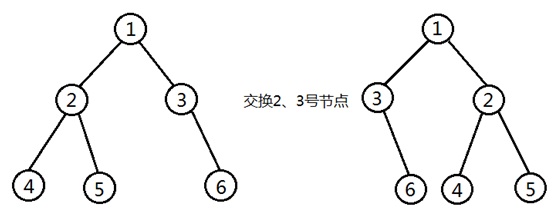
- 前驱询问
询问二叉树的一个节点对应的子树最左边的节点。 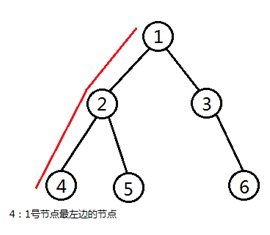
输入
第一行输出一个整数t(t <= 100),代表测试数据的组数。
对于每组测试数据,第一行输入两个整数n m,n代表二叉树节点的个数,m代表操作的次数。
随后输入n行,每行包含3个整数X Y Z,对应二叉树一个节点的信息。X表示节点的标识,Y表示其左孩子的标识,Z表示其右孩子的标识。
再输入m行,每行对应一次操作。每次操作首先输入一个整数type。
当type=1,节点交换操作,后面跟着输入两个整数x y,表示将标识为x的节点与标识为y的节点交换。输入保证对应的节点不是祖先关系。
当type=2,前驱询问操作,后面跟着输入一个整数x,表示询问标识为x的节点对应子树最左的孩子。
1<=n<=100,节点的标识从0到n-1,根节点始终是0. m<=100
输出
对于每次询问操作,输出相应的结果。
样例输入
2
5 5
0 1 2
1 -1 -1
2 3 4
3 -1 -1
4 -1 -1
2 0
1 1 2
2 0
1 3 4
2 2
3 2
0 1 2
1 -1 -1
2 -1 -1
1 1 2
2 0
样例输出
1
3
4
2
用字典+列表的确比类方便
python
# 数学科学学院 王镜廷 2300010724
def find_leftmost_node(son, u):
    while son[u][0] != -1:
        u = son[u][0]
    return u

def main():
    t = int(input())
    for _ in range(t):
        n, m = map(int, input().split())

        son = [-1] * (n + 1)  # 存储每个节点的子节点
        parent = {}  # 存储每个节点的父节点和方向,{节点: (父节点, 方向)}

        for _ in range(n):
            i, u, v = map(int, input().split())
            son[i] = [u, v]
            parent[u] = (i, 0)  # 左子节点
            parent[v] = (i, 1)  # 右子节点

        for _ in range(m):
            s = input().split()
            if s[0] == "1":
                u, v = map(int, s[1:])
                fu, diru = parent[u]
                fv, dirv = parent[v]
                son[fu][diru] = v
                son[fv][dirv] = u
                parent[v] = (fu, diru)
                parent[u] = (fv, dirv)
            elif s[0] == "2":
                u = int(s[1])
                root = find_leftmost_node(son, u)
                print(root)

if __name__ == "__main__":
    main()
python
# 23n2300011072 蒋子轩
def swap(x, y):
    tree[loc[x][0]][loc[x][1]] = y
    tree[loc[y][0]][loc[y][1]] = x
    loc[x], loc[y] = loc[y], loc[x]


for _ in range(int(input())):
    n, m = map(int, input().split())
    tree = {}
    loc = [[] for _ in range(n)]
    for _ in range(n):
        a, b, c = map(int, input().split())
        tree[a] = [b, c]
        loc[b], loc[c] = [a, 0], [a, 1]
    for _ in range(m):
        op = list(map(int, input().split()))
        if op[0] == 1:
            swap(op[1], op[2])
        else:
            cur = op[1]
            while tree[cur][0] != -1:
                cur = tree[cur][0]
            print(cur)
OOP方式。同一个parent要特殊考虑。否则同一个 parent,48行相当于又交换。
python
class TreeNode:
    def __init__(self, val):
        self.val = val
        self.left = None
        self.right = None
        self.parent = None

class BinaryTree:
    def __init__(self, n):
        self.root = TreeNode(0)
        self.node_dict = {0: self.root}
        self.build_tree(n)

    def build_tree(self, n):
        for _ in range(n):
            idx, left, right = map(int, input().split())
            if idx not in self.node_dict:
                self.node_dict[idx] = TreeNode(idx)
            node = self.node_dict[idx]
            if left != -1:
                if left not in self.node_dict:
                    self.node_dict[left] = TreeNode(left)
                left_node = self.node_dict[left]
                node.left = left_node
                left_node.parent = node
            if right != -1:
                if right not in self.node_dict:
                    self.node_dict[right] = TreeNode(right)
                right_node = self.node_dict[right]
                node.right = right_node
                right_node.parent = node

    def swap_nodes(self, x, y):
        node_x = self.node_dict[x]
        node_y = self.node_dict[y]
        px, py = node_x.parent, node_y.parent

        if px == py:
            px.left, px.right = px.right, px.left
            return

        # Swap in the parent's children references
        if px.left == node_x:
            px.left = node_y
        else:
            px.right = node_y

        if py.left == node_y:
            py.left = node_x
        else:
            py.right = node_x

        # Swap their parent references
        node_x.parent, node_y.parent = py, px

    def find_leftmost_child(self, x):
        node = self.node_dict[x]
        while node.left:
            node = node.left
        return node.val

def main():
    t = int(input())
    for _ in range(t):
        n, m = map(int, input().split())
        tree = BinaryTree(n)
        for _ in range(m):
            op, *args = map(int, input().split())
            if op == 1:
                x, y = args
                tree.swap_nodes(x, y)
            elif op == 2:
                x, = args
                print(tree.find_leftmost_child(x))

if __name__ == "__main__":
    main()
思路:建树,注意交换节点的时候搞清楚哪个变量在引用什么,否则容易出现死循环之类的
python
# 夏天明 元培学院
class Node:
    def __init__(self, name):
        self.name = name
        self.child = [None, None]
        self.parent = None

    def findLef(self):
        curr = self
        while (lef := nodes[curr.child[0]]):
            curr = lef
        return curr.name

for o in range(int(input())):
    n, m = map(int, input().split())
    nodes = [Node(i) for i in range(n)] + [None]
    for o in range(n):
        x, *idx = map(int, input().split())
        nodes[x].child = idx
        for i in [0,1]:
            if idx[i] != -1:
                nodes[idx[i]].parent = (nodes[x],i)
    for o in range(m):
        token, *idx = map(int, input().split())
        if token == 1:
            p = [nodes[i].parent for i in idx]
            for i in [0,1]:
                p[i][0].child[p[i][1]] = idx[1-i]
                nodes[idx[i]].parent = p[1-i]
        else:
            print(nodes[idx[0]].findLef())
思路:没有特别的操作。20min。
python
# 谭琳诗倩、2200013722
class BinaryTree:
    def __init__(self,root):
        self.root = root
        self.left = None
        self.right = None
        self.father = None

for _ in range(int(input())):
    n,m = map(int,input().split())
    tree_list = list(BinaryTree(i) for i in range(n))

    for __ in range(n):
        root,left,right = map(int,input().split())
        if left != -1:
            tree_list[root].left = tree_list[left]
            tree_list[left].father = tree_list[root]
        if right != -1:
            tree_list[root].right = tree_list[right]
            tree_list[right].father = tree_list[root]

    for __ in range(m):
        type,*tu = map(int,input().split())

        if type == 1: # swap
            x,y = tu
            tree1,tree2 = tree_list[x],tree_list[y]
            father1 = tree1.father
            father2 = tree2.father
            if father2 is father1:
                father2.left,father2.right = father2.right,father2.left

            else:
                if father1.left == tree1:
                    father1.left = tree2
                else: father1.right = tree2

                if father2.left == tree2:
                    father2.left = tree1
                else: father2.right = tree1
                tree1.father,tree2.father = father2,father1

        elif type == 2:
            node = tree_list[tu[0]]
            while node.left:
                node = node.left
            print(node.root)
python
# 23n2300011072(X) 蒋子轩
class TreeNode:
    def __init__(self,val=0):
        self.val=val
        self.left=None
        self.right=None
def build_tree(nodes_info):
    nodes=[TreeNode(i) for i in range(n)]
    for val,left,right in nodes_info:
        if left!=-1:
            nodes[val].left=nodes[left]
        if right!=-1:
            nodes[val].right=nodes[right]
    return nodes
def swap_nodes(nodes,x,y):
    for node in nodes:
        if node.left and node.left.val in[x,y]:
            node.left=nodes[y] if node.left.val==x else nodes[x]
        if node.right and node.right.val in[x,y]:
            node.right=nodes[y] if node.right.val==x else nodes[x]
def find_leftmost(node):
    while node and node.left:
        node=node.left
    return node.val if node else -1
for _ in range(int(input())):
    n,m=map(int,input().split())
    nodes_info=[tuple(map(int,input().split())) for _ in range(n)]
    ops=[tuple(map(int,input().split())) for _ in range(m)]
    nodes=build_tree(nodes_info)
    for op in ops:
        if op[0]==1:
            swap_nodes(nodes,op[1],op[2])
        elif op[0]==2:
            print(find_leftmost(nodes[op[1]]))
思路:只记录父子关系即可
python
# Xinjie Song, Phy
for _ in range(int(input())):
    n, m = map(int, input().split())
    edges = {i: [0, 0, 0] for i in range(n)}
    for i in range(n):
        x, y, z = map(int, input().split())
        edges[x][1], edges[x][2] = y, z
        if y != -1:
            edges[y][0] = x
        if z != -1:
            edges[z][0] = x
    for __ in range(m):
        s = list(map(int, input().split()))
        if s[0] == 1:
            x, y = s[1], s[2]
            x_father, y_father = edges[x][0], edges[y][0]
            x_idx, y_idx = 1 + (edges[x_father][2] == x), 1 + (edges[y_father][2] == y)
            edges[x_father][x_idx], edges[y_father][y_idx], edges[x][0], edges[y][0] = y, x, y_father, x_father
        else:
            x = s[1]
            while edges[x][1] != -1:
                x = edges[x][1]
            print(x)