222.完全二叉树的节点个数
bfs, dfs, binary + greedy, https://leetcode.cn/problems/count-complete-tree-nodes/
如果用bfs, dfs写是简单级别,binary search是中级难度。
给你一棵 完全二叉树 的根节点 root ,求出该树的节点个数。
完全二叉树 的定义如下:在完全二叉树中,除了最底层节点可能没填满外,其余每层节点数都达到最大值,并且最下面一层的节点都集中在该层最左边的若干位置。若最底层为第 h 层(从第 0 层开始),则该层包含 1~ 2h 个节点。
示例 1:
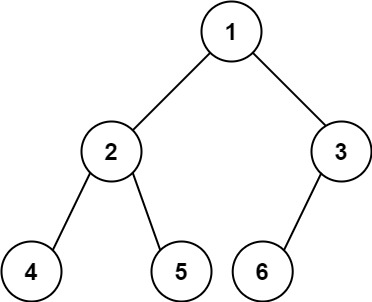
输入:root = [1,2,3,4,5,6]
输出:6
示例 2:
输入:root = []
输出:0
示例 3:
输入:root = [1]
输出:1
提示:
- 树中节点的数目范围是
[0, 5 * 10^4] 0 <= Node.val <= 5 * 10^4- 题目数据保证输入的树是 完全二叉树
进阶:遍历树来统计节点是一种时间复杂度为 O(n) 的简单解决方案。你可以设计一个更快的算法吗?
思路:直接递归很简单
优化的话利用完全二叉树的性质,左右子树至少有一个是满二叉树,可以直接得出节点数目。学习了一下二进制运算符(满二叉树的节点数为 2^h - 1,其中 h 是树的高度。使用左移运算符可以高效地计算 2^h)
# Definition for a binary tree node.
# class TreeNode:
#     def __init__(self, val=0, left=None, right=None):
#         self.val = val
#         self.left = left
#         self.right = right
class Solution:
    def countNodes(self, root: Optional[TreeNode]) -> int:
        if not root:
            return 0
        leftnum = self.countNodes(root.left)
        rightnum = self.countNodes(root.right)
        return 1+leftnum +rightnum
#以下是利用完全二叉树性质的解法
class Solution:
    def countNodes(self, root: Optional[TreeNode]) -> int:
        if not root:
            return 0

        left_height = self.get_height(root.left)
        right_height = self.get_height(root.right)

        if left_height == right_height:
            # 左子树是满二叉树
            return (1 << left_height) + self.countNodes(root.right)
        else:
            # 右子树是满二叉树
            return (1 << right_height) + self.countNodes(root.left)

    def get_height(self, node):
        height = 0
        while node:
            height += 1
            node = node.left
        return height
核心逻辑
在完全二叉树中:
如果 left_height == right_height,则说明左子树是满二叉树。 如果 left_height != right_height,则说明右子树是满二叉树。 这是因为:
完全二叉树的节点从左到右依次填满,所以如果左右子树的高度相等,左子树必然是满二叉树。 如果左右子树的高度不相等,则右子树必然是满二叉树(因为右子树的高度比左子树少一层)。
bfs
from collections import deque

# 定义树节点类
class TreeNode:
    def __init__(self, val=0, left=None, right=None):
        self.val = val
        self.left = left
        self.right = right

class Solution:
    def countNodes(self, root: TreeNode) -> int:
        # 如果根节点为空,直接返回 0
        if not root:
            return 0

        # 初始化队列和计数器
        queue = deque([root])
        count = 0

        # 使用 BFS 遍历树
        while queue:
            node = queue.popleft()
            count += 1  # 每访问一个节点,计数器加 1

            # 将左右子节点加入队列(如果存在)
            if node.left:
                queue.append(node.left)
            if node.right:
                queue.append(node.right)

        return count
思路:起初用简单的dfs思路AC了,但时间复杂度不够好看,于是尝试新方法,看了题解中的二进制思路后大受震撼,故用二进制思路走了一遍。
from typing import Optional

class TreeNode:
    def __init__(self, val=0, left=None, right=None):
        self.val = val
        self.left = left
        self.right = right

class Solution:
    def countNodes(self, root: Optional[TreeNode]) -> int:
        if not root:
            return 0

        def check(node_index: int, current_node: Optional[TreeNode]) -> bool:
            """
            检查编号为 node_index 的节点是否存在。
            :param node_index: 节点编号(从 1 开始)
            :param current_node: 当前遍历到的节点
            :return: 如果节点存在返回 True,否则返回 False
            """
            # 将节点编号转换为二进制路径(去掉 '0b' 前缀)
            path = bin(node_index)[3:]
            for direction in path:
                if direction == '0':
                    current_node = current_node.left
                else:
                    current_node = current_node.right
                # 如果当前节点为空,说明该路径不存在
                if not current_node:
                    return False
            return True

        # 计算树的高度(从根节点到最深左子节点的路径长度)
        height = 0
        current = root
        while current.left:
            height += 1
            current = current.left

        # 二分查找最后一层的节点范围
        left, right = 2 ** height, 2 ** (height + 1) - 1
        while left < right:
            mid = (left + right) // 2
            if check(mid, root):
                left = mid + 1  # 编号 mid 存在,尝试更大的编号
            else:
                right = mid  # 编号 mid 不存在,尝试更小的编号

        # 检查最终结果是否包含最后一个节点
return left if check(left, root) else left - 1这题是关于“完全二叉树的节点个数”,如果使用普通遍历,时间复杂度是 O(n)。但由于题目保证这是一棵“完全二叉树”,可以利用它的结构性质设计一个更快的算法 ——
✅ 思路:利用完全二叉树的高度特性(二分 + 递归)
💡 完全二叉树的特性:
- 除了最后一层,其他每一层的节点数都达到最大;
- 最后一层节点从左到右连续排列;
- 所以我们可以利用“左子树和右子树高度是否相等”来判断哪边是满的。
✅ 算法步骤
1. 对于当前节点:
   - 计算左子树的深度 left_depth(从左一路到底)
   - 计算右子树的深度 right_depth(从右一路到底)

2. 如果 left_depth == right_depth:
   → 说明是满二叉树,节点个数是 2^depth - 1;
3. 否则:
   → 左右子树继续递归统计。
✅ 代码(Python)
class Solution:
    def countNodes(self, root: Optional[TreeNode]) -> int:
        if not root:
            return 0

        def get_depth(node, go_left=True):
            depth = 0
            while node:
                depth += 1
                node = node.left if go_left else node.right
            return depth

        left_depth = get_depth(root, True)
        right_depth = get_depth(root, False)

        if left_depth == right_depth:
            # 是满二叉树
            return (1 << left_depth) - 1
        else:
            return 1 + self.countNodes(root.left) + self.countNodes(root.right)
✅ 时间复杂度分析
get_depth()的时间是O(log n)- 每层递归最多进行一次
get_depth(),最多递归log n层 - 所以总复杂度为
,比 O(n) 快很多
利用完全二叉树的特性,结合 二分查找(Binary Search)+ 贪心(Greedy) 来将时间复杂度从 O(n) 降低到 O(log² n)。
✅ 思路总结:
完全二叉树的性质:
- 如果左子树和右子树的高度一样,说明左子树是满的,可以跳过左子树直接查右子树;
- 如果右子树高度比左子树小,则右子树是满的,可以跳过右子树查左子树;
- 利用这个可以实现递归或二分。
使用二分查找判断最后一层节点是否存在:
- 先计算整棵树的高度
h(即从根节点走到最左下角的深度); - 在
[0, 2^h - 1]范围内用二分查找判断某个索引是否存在; - 最后总节点数 =
2^h - 1(前 h 层的满节点)+left(最后一层的节点个数)。
- 先计算整棵树的高度
🔍 Python 实现(Binary Search + Greedy):
class TreeNode:
    def __init__(self, val=0, left=None, right=None):
        self.val = val
        self.left = left
        self.right = right

class Solution:
    def countNodes(self, root: TreeNode) -> int:
        if not root:
            return 0

        def getDepth(node):
            # 计算从当前节点到最左边叶子的深度
            d = 0
            while node.left:
                node = node.left
                d += 1
            return d

        def exists(idx, depth, node):
            # 判断idx编号的节点是否存在于最后一层
            left, right = 0, 2 ** depth - 1
            for _ in range(depth):
                mid = (left + right) // 2
                if idx <= mid:
                    node = node.left
                    right = mid
                else:
                    node = node.right
                    left = mid + 1
                if not node:
                    return False
            return True

        depth = getDepth(root)
        if depth == 0:
            return 1  # 只有一个节点

        # 二分查找最后一层的节点数
        left, right = 0, 2 ** depth - 1
        while left <= right:
            mid = (left + right) // 2
            if exists(mid, depth, root):
                left = mid + 1
            else:
                right = mid - 1

        # 总节点数 = 前面满的节点 + 最后一层的实际节点数
        return (2 ** depth - 1) + left
✅ 时间复杂度分析:
getDepth:O(log n)- 每次
exists判断走depth层,O(log n) - 二分查找次数为 log(n)
- 所以总复杂度是 O((log n)²)。
这个问题的解法里,确实用了 两层二分,我们来分开讲清楚它们的目的和操作方式。
🔍 二分查找一:在最后一层找有多少节点
🧠 背景:
完全二叉树中,前
h层一定是满的(即节点数是2^h - 1),最后一层最多有2^h个节点,编号为[0, 2^h - 1]。我们要找的是:最后一层到底有多少个节点存在?
🧪 怎么找?
我们对最后一层的编号区间
[0, 2^h - 1]做 二分查找,判断编号为mid的节点是否存在。如果
mid存在,说明左边都是满的,可能还有更多 → 查右边;如果
mid不存在,说明超出了当前树 → 查左边。这就是外层二分:
pythonleft, right = 0, 2 ** depth - 1 while left <= right: mid = (left + right) // 2 if exists(mid, depth, root): # 二分查找是否存在这个编号 left = mid + 1 else: right = mid - 1最终,
left就是最后一层真实存在的节点数。🔍 二分查找二:exists() 函数内部,用编号查路径
🧠 背景:
现在我们要判断某个编号
idx(从 0 开始)对应的节点是否存在于完全二叉树的最后一层。但我们没有树的数组表示,要从根节点走路径到目标位置。问题是我们只知道编号
idx,不知道怎么走。🧪 怎么用二分走路径?
我们假设最后一层的编号范围是
[0, 2^depth - 1],每次根据idx和中间值mid来判断:
- 如果
idx <= mid,目标在左子树,往左走;- 否则在右子树,往右走;
这样从根开始走
depth步,模拟走到idx这个位置,看看这个路径上有没有空节点。pythondef exists(idx, depth, node): left, right = 0, 2 ** depth - 1 for _ in range(depth): mid = (left + right) // 2 if idx <= mid: node = node.left right = mid else: node = node.right left = mid + 1 if not node: return False return True✅ 小结:
目的 二分查找的位置 查找什么 操作 外层二分 [0, 2^depth - 1]最后一层有多少节点 countNodes主体中内层二分 路径 [0, 2^depth - 1]某个编号的节点是否存在 exists()中